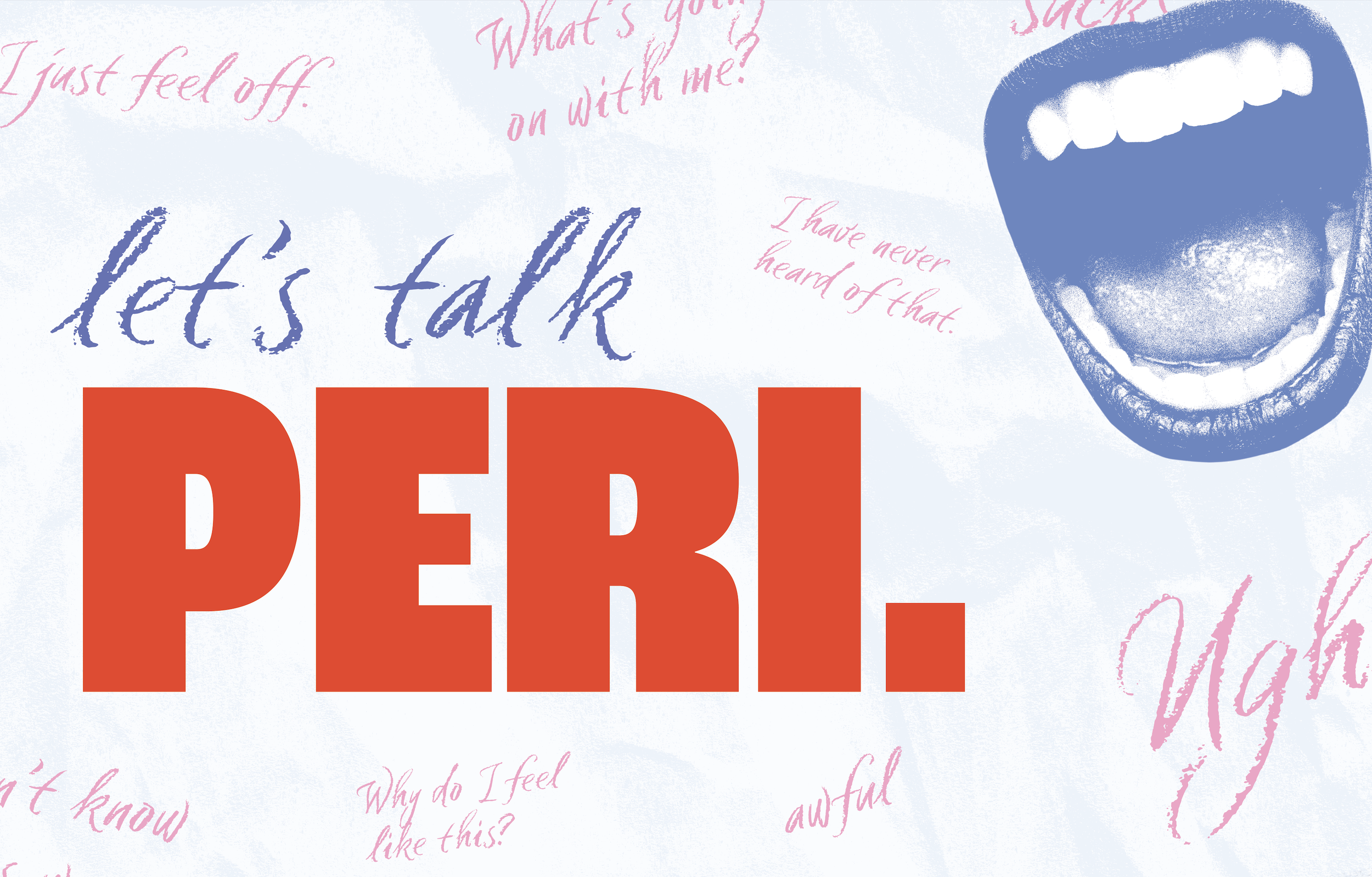
Let’s Talk Peri
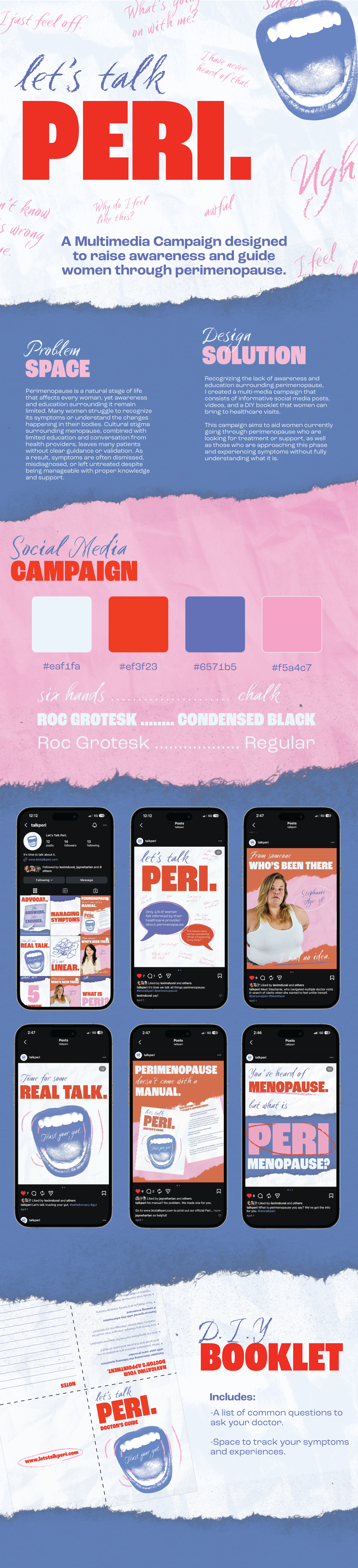
Perimenopause is a natural stage of life that affects every woman, yet awareness and education surrounding it remain limited. Many women struggle to recognize its symptoms or understand the changes happening in their bodies. Cultural stigma surrounding menopause, combined with limited education and conversation from health providers, leaves many patients without clear guidance or validation. As a result, symptoms are often dismissed, misdiagnosed, or left untreated despite being manageable with proper knowledge and support.
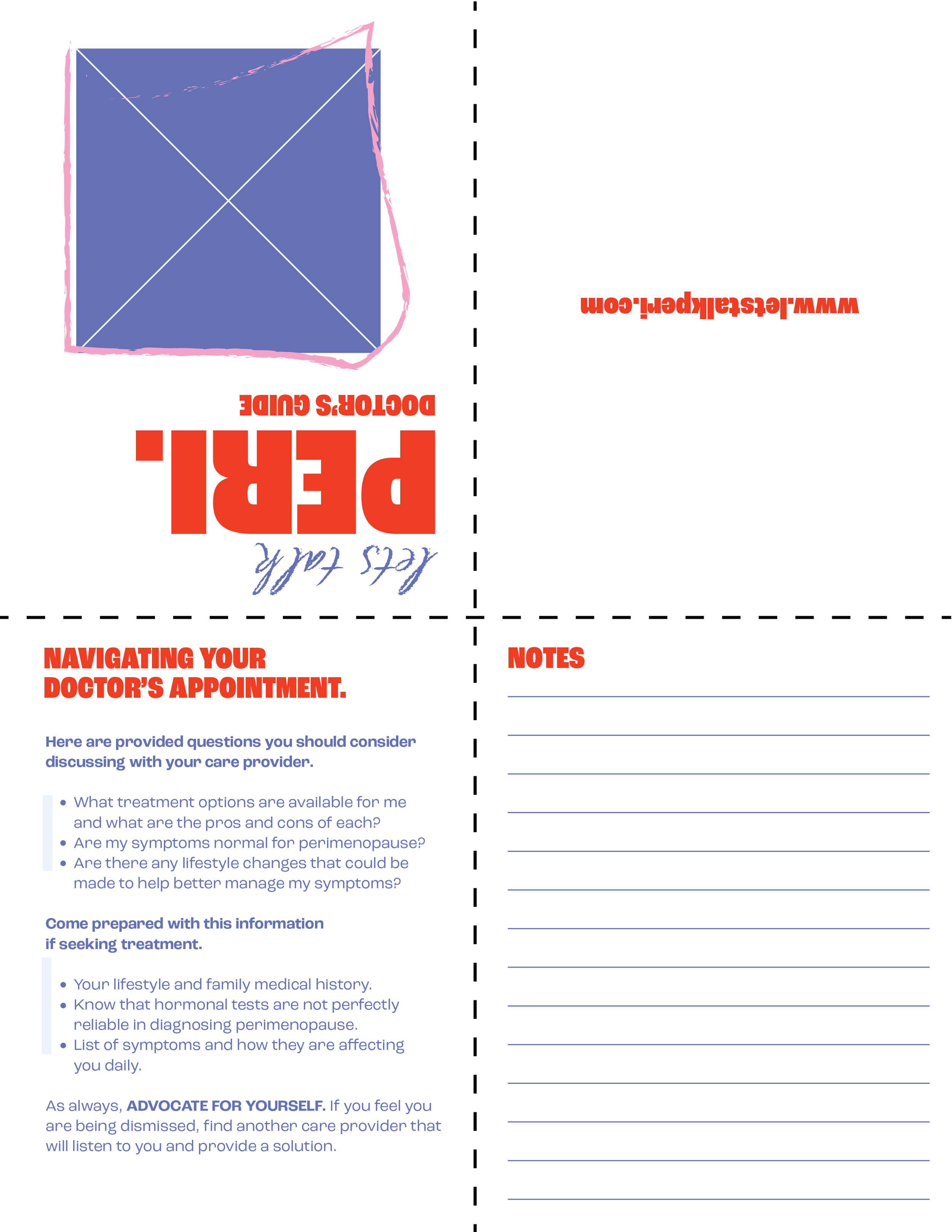
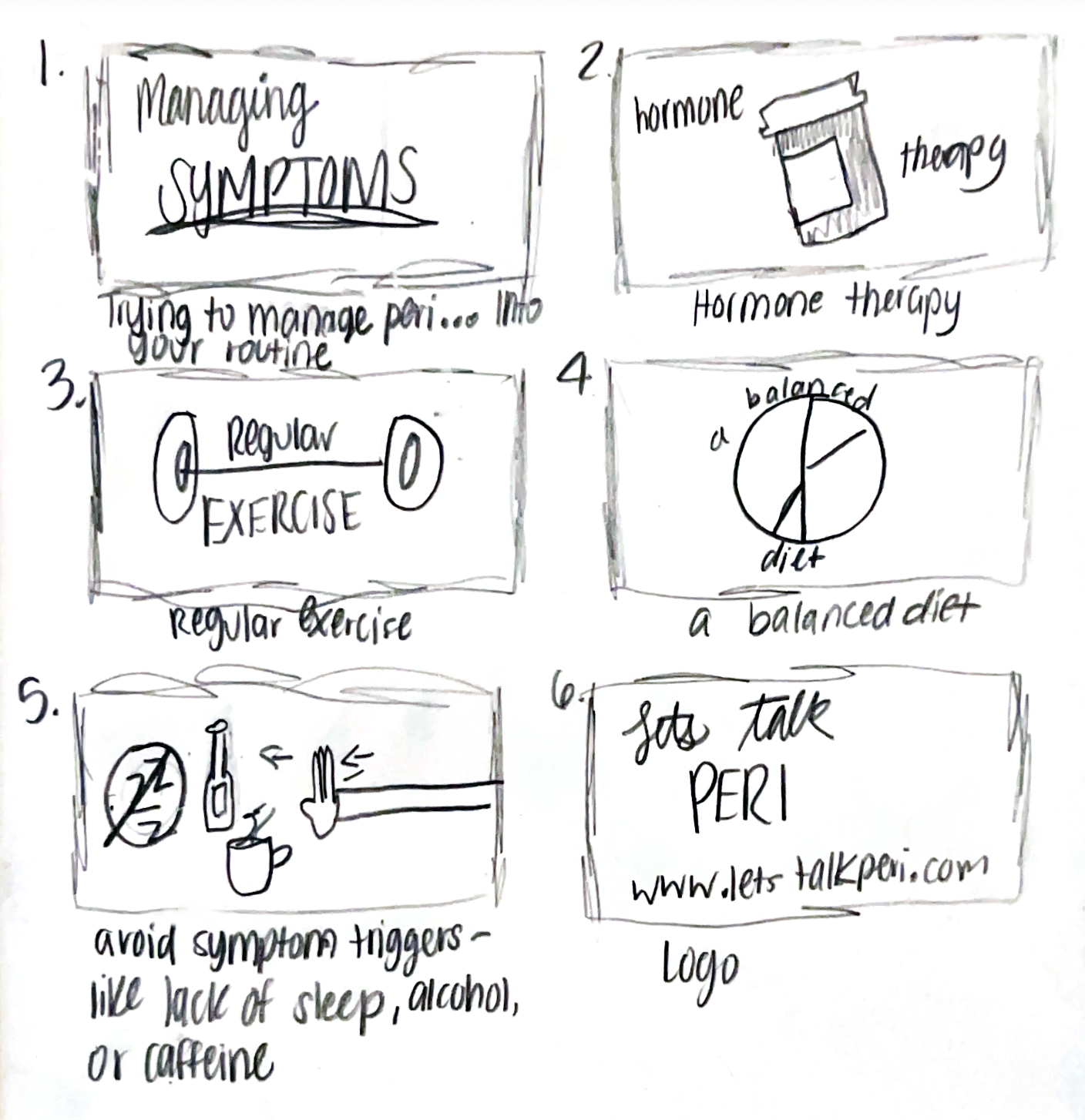
Design Objective: Recognizing the lack of awareness and education surrounding perimenopause, I created a multimedia campaign that consists of informative social media posts, videos, and a DIY booklet that women can bring to healthcare visits.
This campaign created for my Senior Capstone aims to aid women currently going through perimenopause who are looking for treatment or support, as well as those who are approaching this phase and experiencing symptoms without fully understanding what it is.
Research
Benchmarking
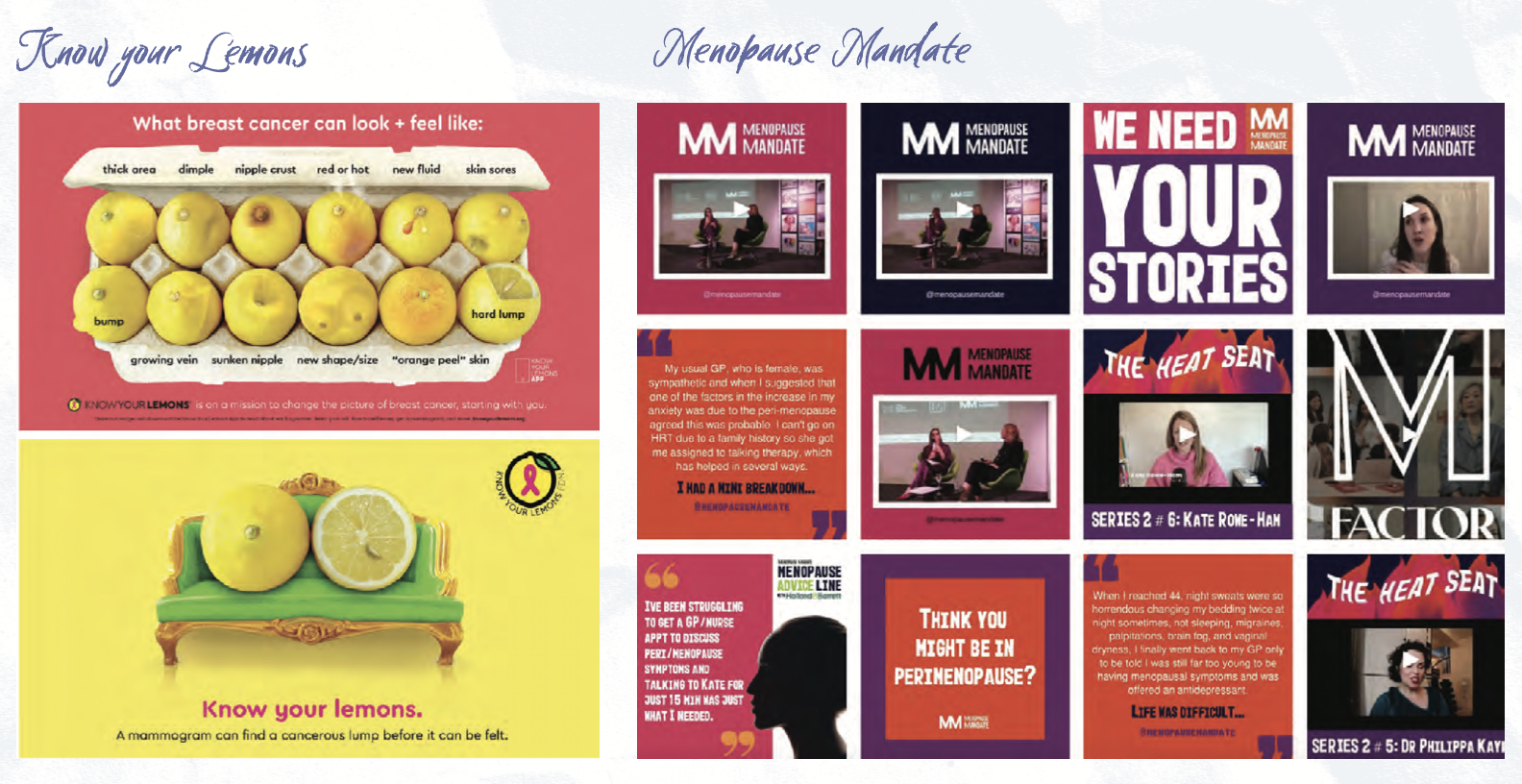
To begin my research, I looked at design campaigns and articles surrounding women’s health and how they utilized color, imagery, type, and diction to spread awareness on their chosen topic.
Personas
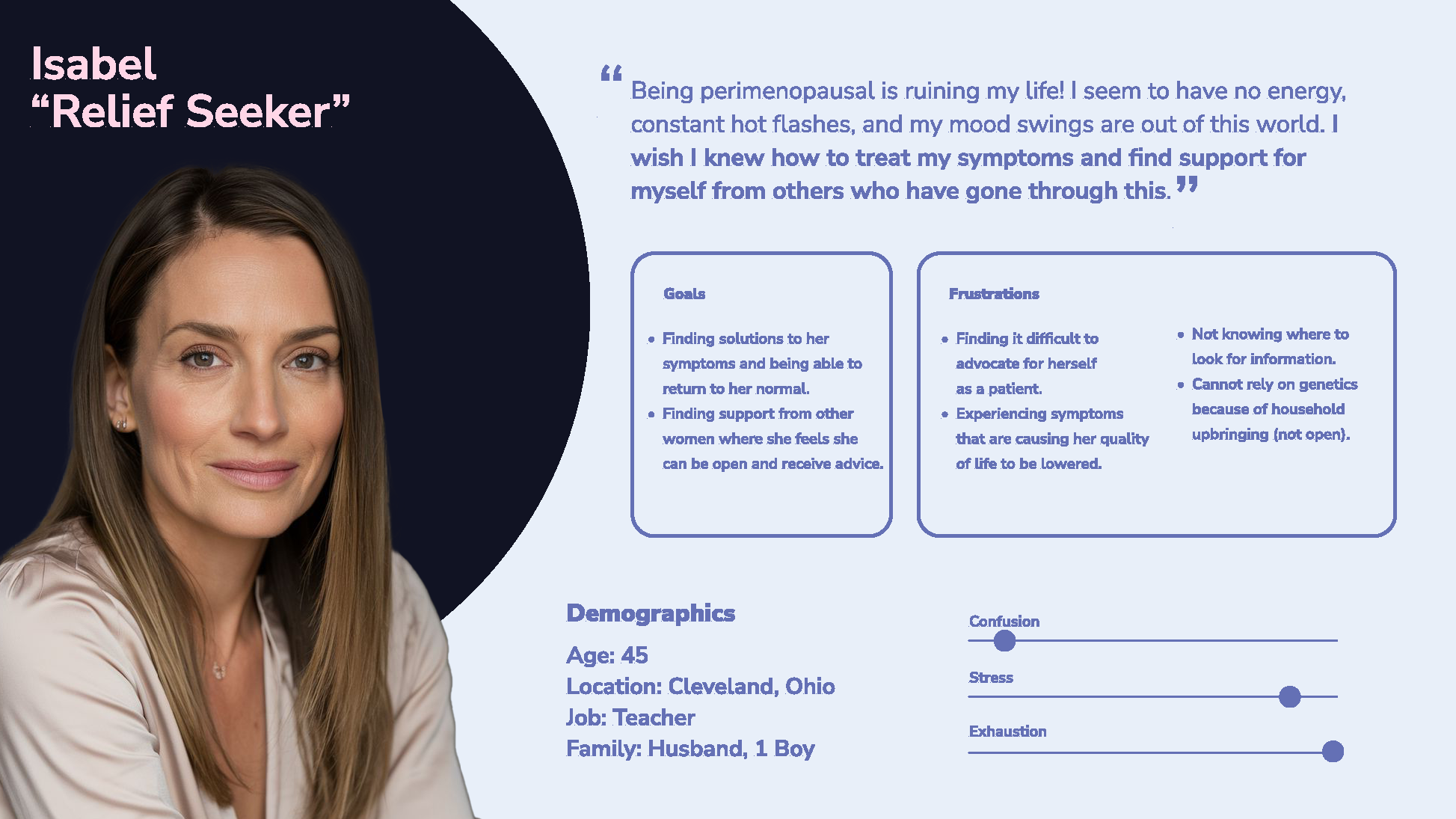
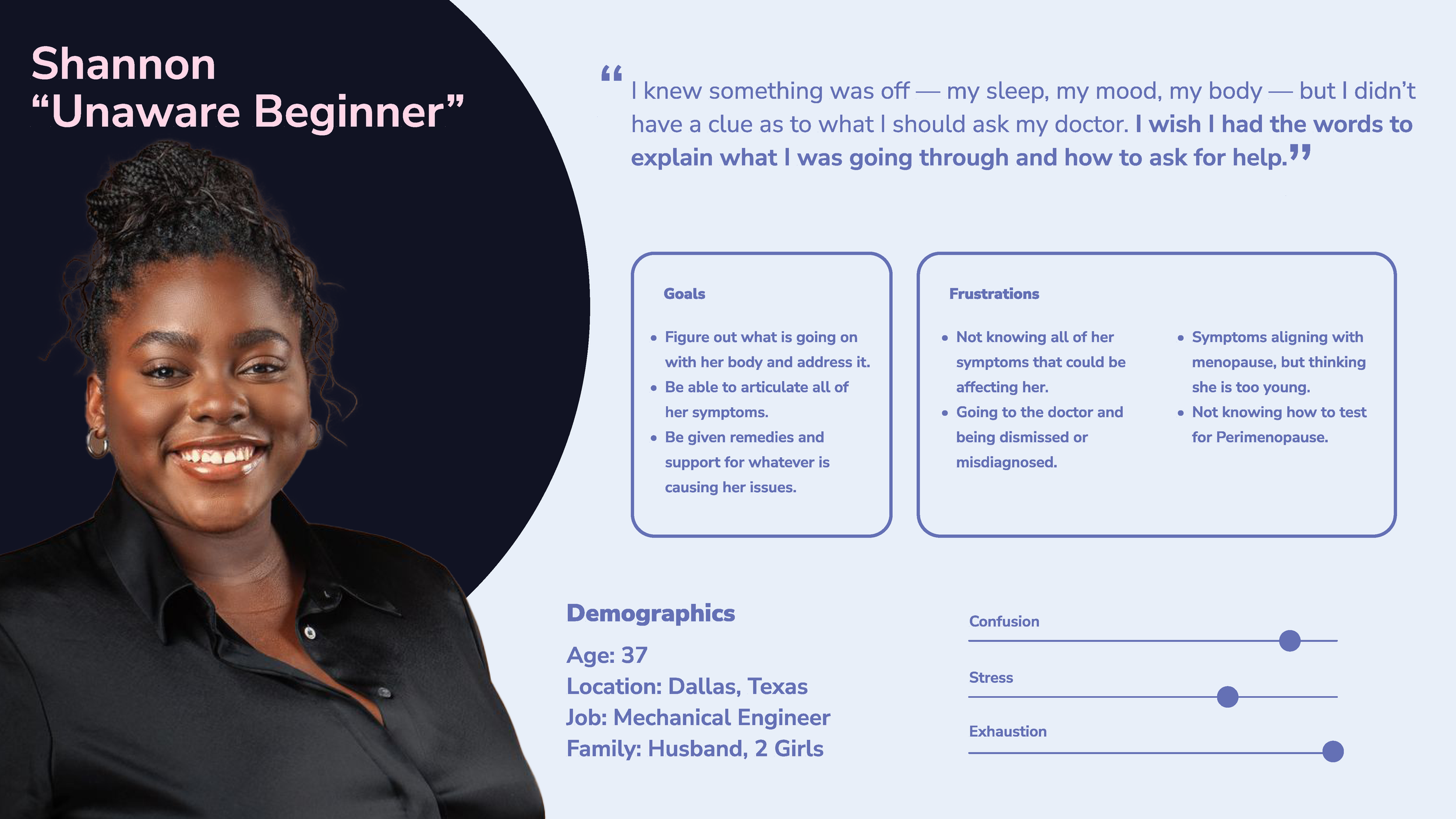
To better understand my target audience when designing, I created personas to generalize my research findings and hone in on who I would be designing for.
Overall Insights
Insight 1 - Advocating
Women navigating perimenopause must self-advocate and know how to ask the right questions,
or risk being overlooked.
Insight 2 - Negative Attitude
For the majority of women the emotional narrative surrounding perimenopause is dominated by negativity. This life stage is not something women feel positively about.
Surveying & Interviewing
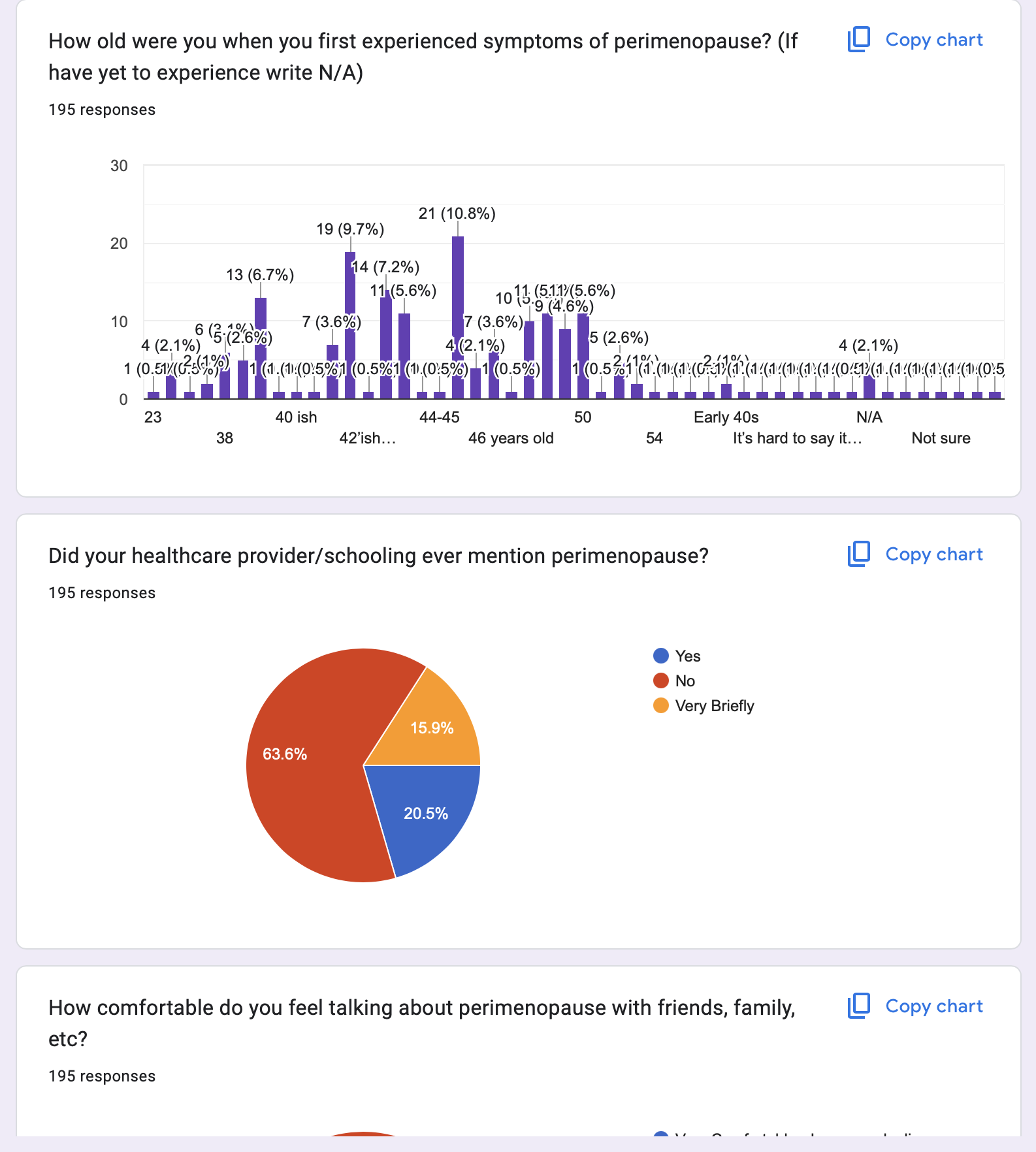
Reaching out through social media groups and personal friends, I surveyed around 200 women to gain insight into their own experiences with perimenopause.
I also individually spoke with women who have went through perimenopause to gain more in depth information and experiences, as well as a gynecologist who was an expert in the field.
Insight 3 - Conversational Tone
The majority of women prefer when health topics are presented in a conversational and less formal way.
Insight 4 - Campaign Placement
When referring to a campaign, women found that they were most likely to engage with a campaign that was found on social media and provided entertainment, as well as information.
Design Experimentation
Style Exploration
Personal & Handwritten
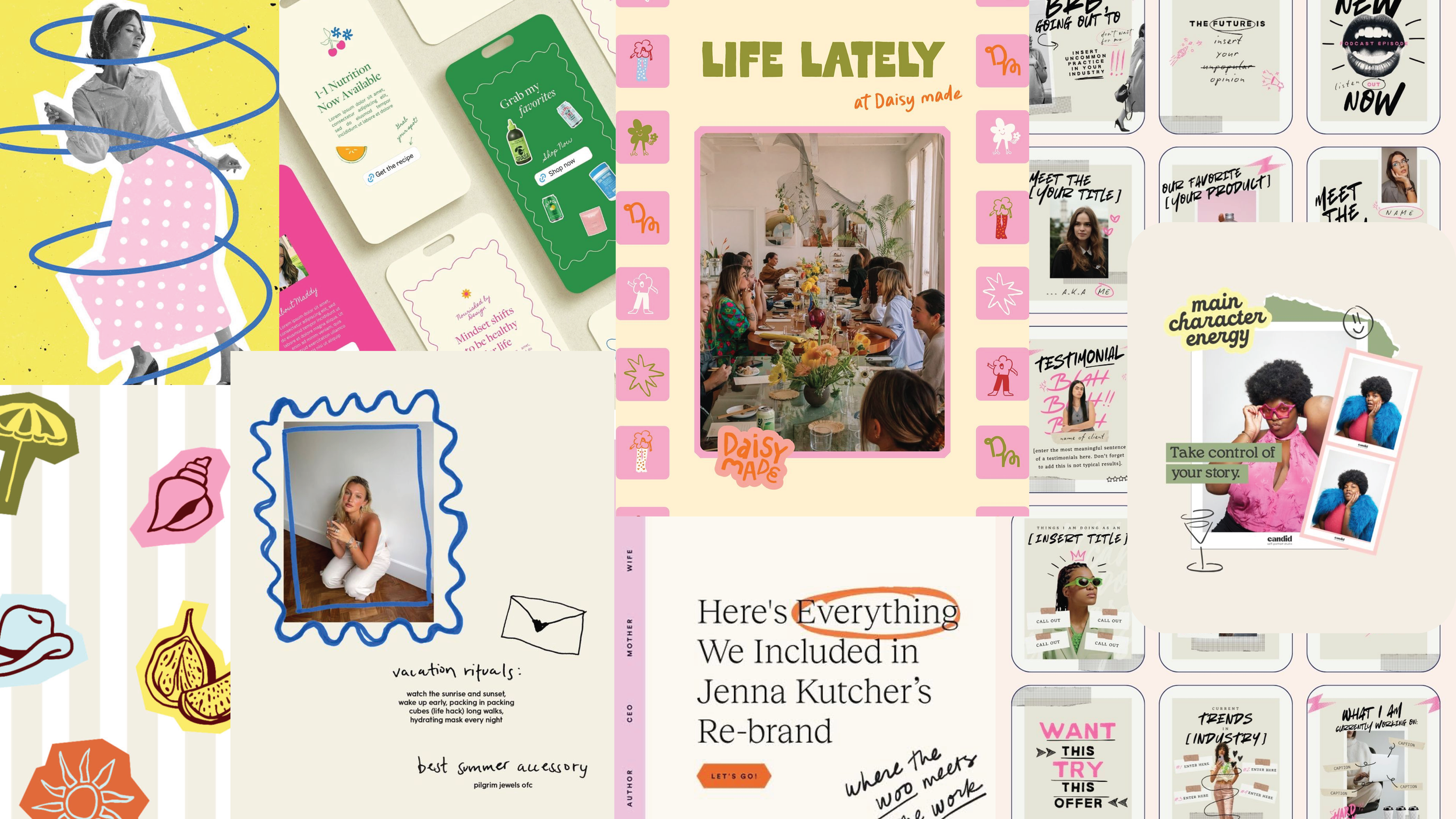
When testing with audiences, this moodboard resonated due to the handwritten and personal aspects visually representing the personal and unique journey of going through perimenopause.
Iterating - Social Media
When iterating, I was looking at experimenting with color, texture, diction, feeling, type, and image. I was trying to combine the feelings of my two most successful moodboards.
Iterating - Video & Booklet
For the booklet and video, I tried to unite styles and create an all around cohesive system.
Bold & Witty
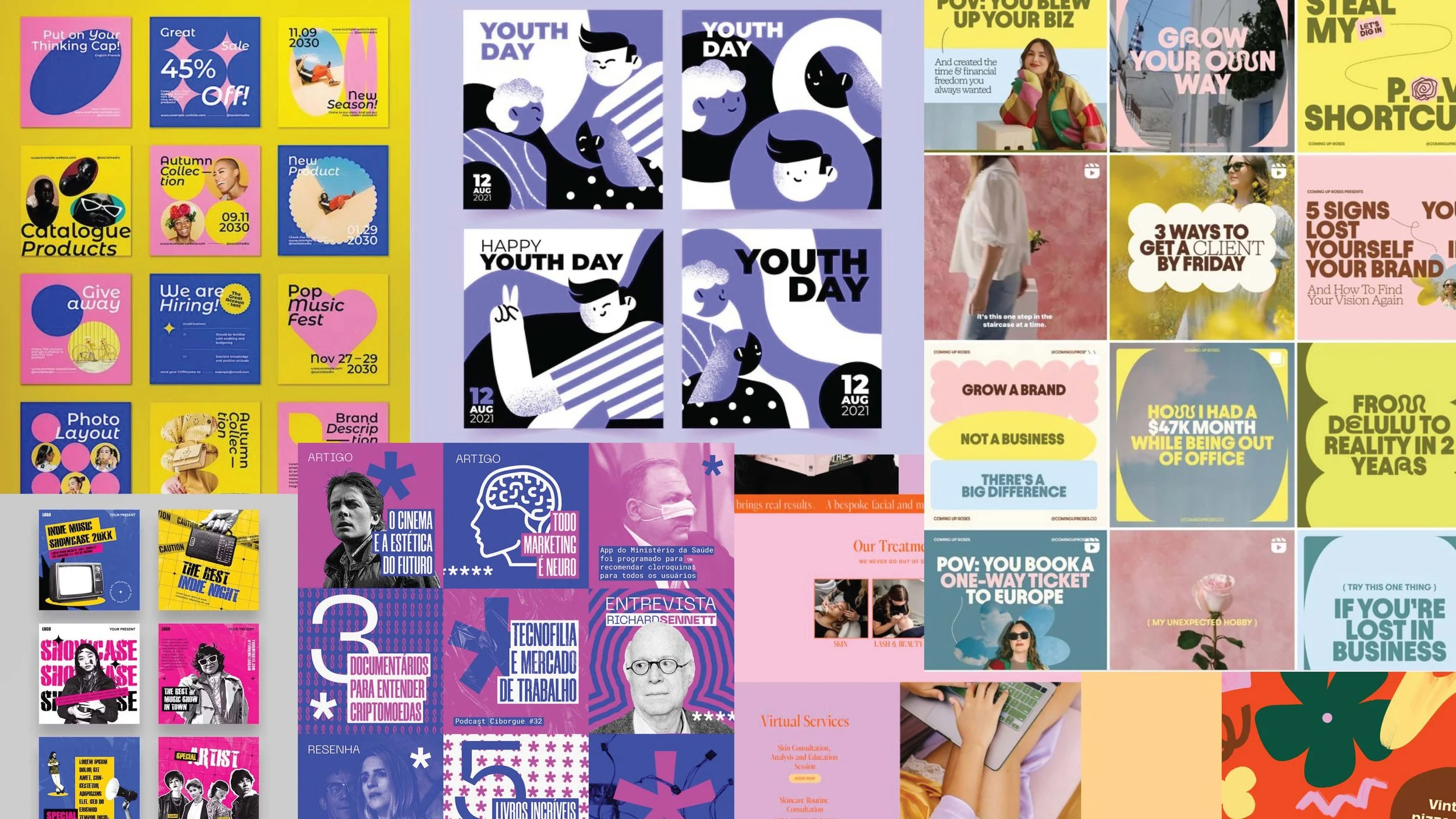
This moodboard also resonated with audiences, as it felt like it grabbed the viewers attention and brought forth a more playful energy. This added to idea of information being presented as more conversational.
Calming & Natural
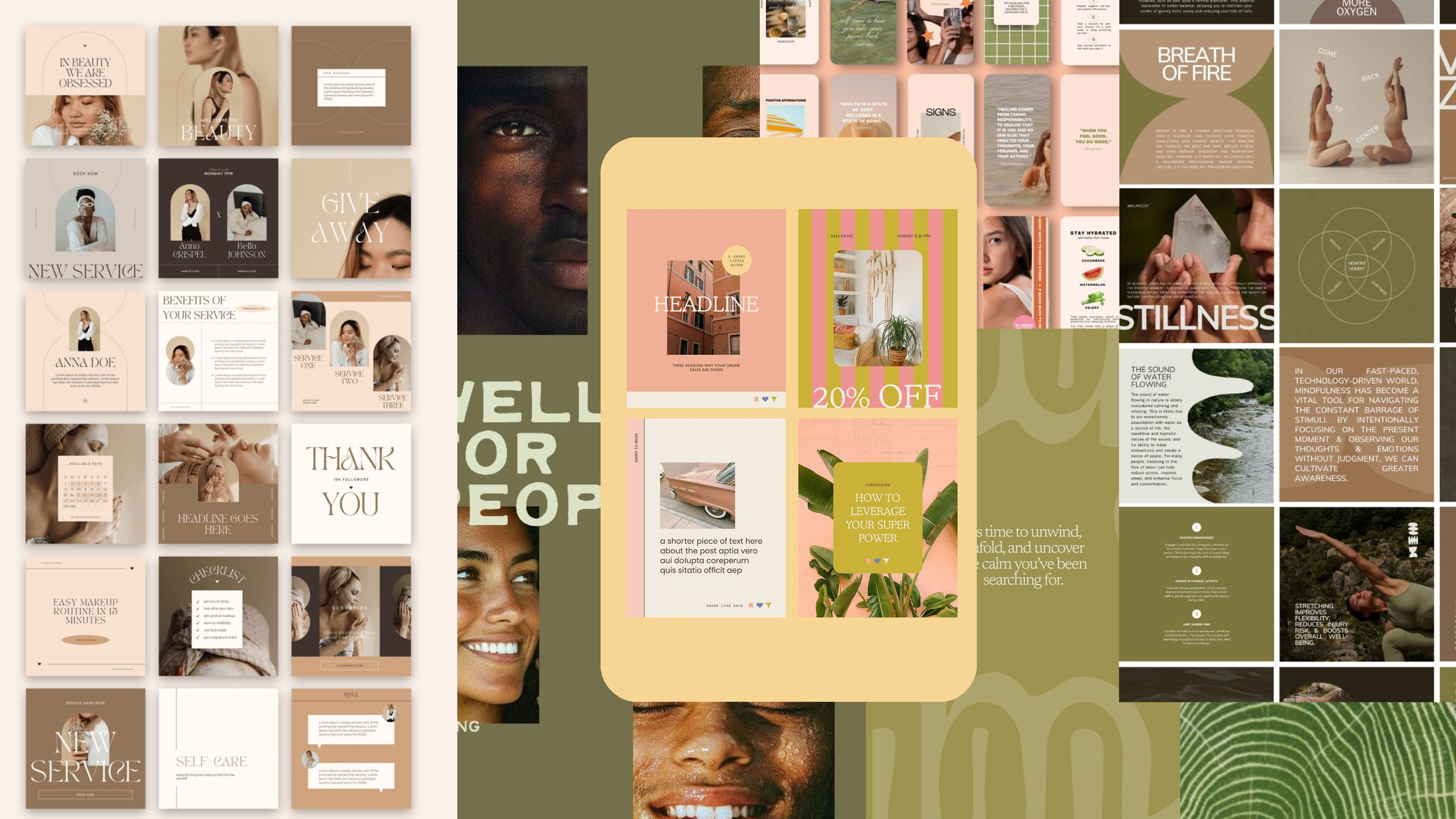
This moodboard felt a bit too serious and while the color palette was appreciated, it did not resonate as much with what I wanted accomplished.
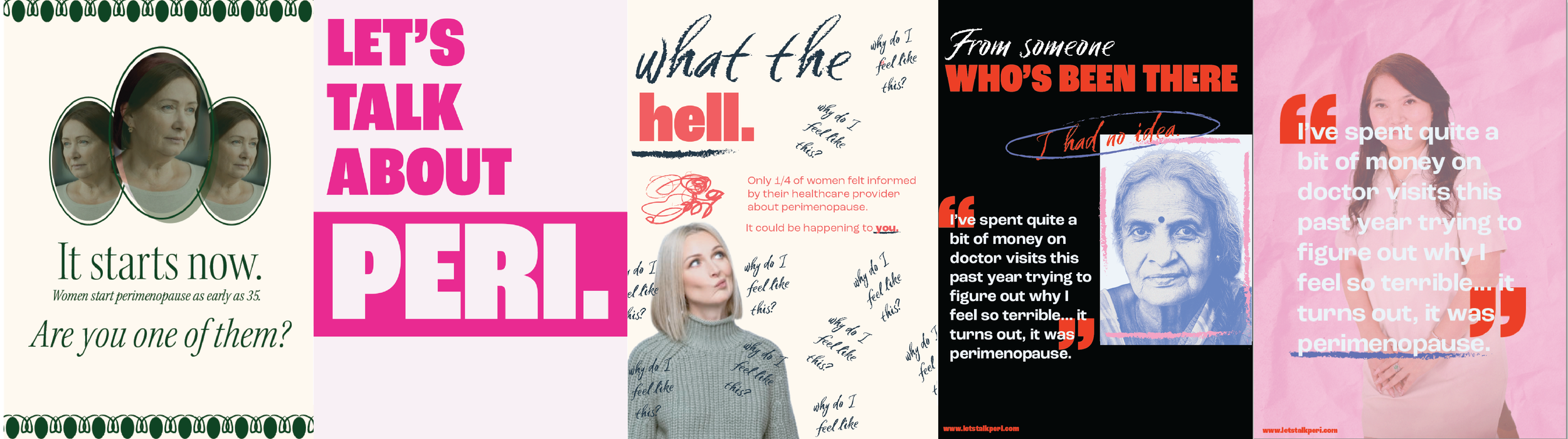
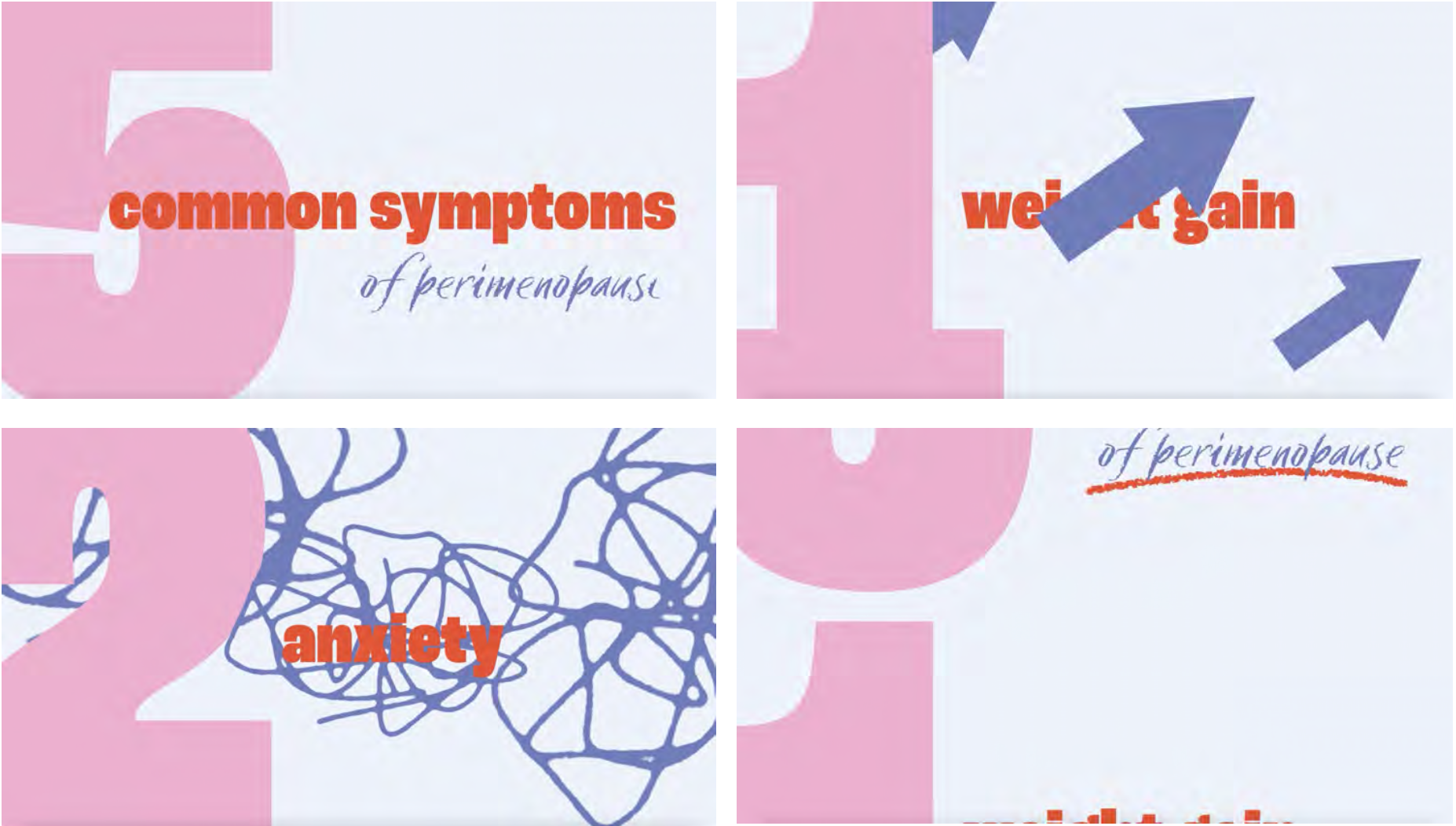
Final Campaign